Best Smart Umbrella with Rain Alerts
You check the forecast before leaving the house. It says 20% chance of rain. You head out without the umbrella. Twenty minutes later you’re caught in a downpour on the way to the station in Amsterdam or Brussels. This happens more often than most people admit. Weather apps give a broad picture. They don’t always tell you what you need at the exact moment you walk out the door.
A good smart umbrella should close that gap. It should tell you when rain is likely in the next short window so you can grab it before you need it — and help when you leave it on a tram, in a café or at the office.
This article looks at what “smart” actually delivers in real European conditions, and where the practical value is.
What Does “Smart Umbrella” Actually Mean?
The term gets thrown around a lot. Some products add a basic Bluetooth tracker and call themselves smart. Others promised weather integration years ago and never delivered anything reliable. A few crowdfunding campaigns showed fancy apps that looked good in videos but failed in daily use.
Genuine usefulness comes down to two things:
- Timely rain alerts that give you enough warning to act.
- A reliable way to find the umbrella when you’ve left it somewhere.
Everything else — fancy sensors, automatic opening, overcomplicated apps — usually adds cost and complexity without solving the real friction. The best smart umbrellas help you avoid getting wet and reduce the chance you lose the umbrella you spent money on. They don’t try to replace your phone’s weather app.
The Real Problem Smart Umbrellas Should Solve
Most people in European cities don’t lose umbrellas because they’re careless. Life moves fast. You grab it on the way out, use it on the walk to the office, then leave it by the coat stand. By the time you realise, you’re already on the train home.
The second problem is sudden rain. European weather in spring, autumn and winter often brings showers that appear faster than general forecasts predict. You see “mostly dry” and leave the umbrella. Thirty minutes later you’re wet.
These two frustrations explain why many people own three or four cheap umbrellas scattered around home, office and bag — none of them particularly good, and none where you need them. A smart umbrella only earns its place if it reduces one or both of those problems.
How Rain Alerts Actually Help in European Weather
A useful system uses weather data to send a notification when rain probability and timing matter for your location — for example “Light rain expected in your area in the next 15–30 minutes.” That gives you time to grab the umbrella before you leave.
This differs from opening a weather app and interpreting hourly graphs while rushing. The alert does the interpretation and only bothers you when there’s a real reason to act.
In cities like Brussels, Amsterdam, Hamburg or Copenhagen — and further south when a sudden summer storm rolls in — this matters more than in places with predictable weather. A cyclist in the Netherlands or someone walking between meetings in Lyon benefits when the notification arrives while they’re still inside.
The alerts don’t need to be perfect. They need to be good enough and early enough that you use the umbrella more often. Over a season that means fewer wet arrivals.
The tracker works alongside this. If you still forget it, or leave it somewhere during the day, you can see its last location on a map — which stops the slow accumulation of replacements.
The Best Smart Umbrellas with Rain Alerts
Most products that claim to be smart fall into two groups: basic umbrellas with a cheap Bluetooth tracker glued on, or ambitious projects that promised advanced features but delivered poor build quality or apps that stopped working.
Few combine reliable rain alerts with a genuinely strong umbrella that handles European wind and lasts more than a couple of seasons.
| Product | Rain alerts | Tracker | Wind performance | Build & longevity | Practical value for Europe |
|---|---|---|---|---|---|
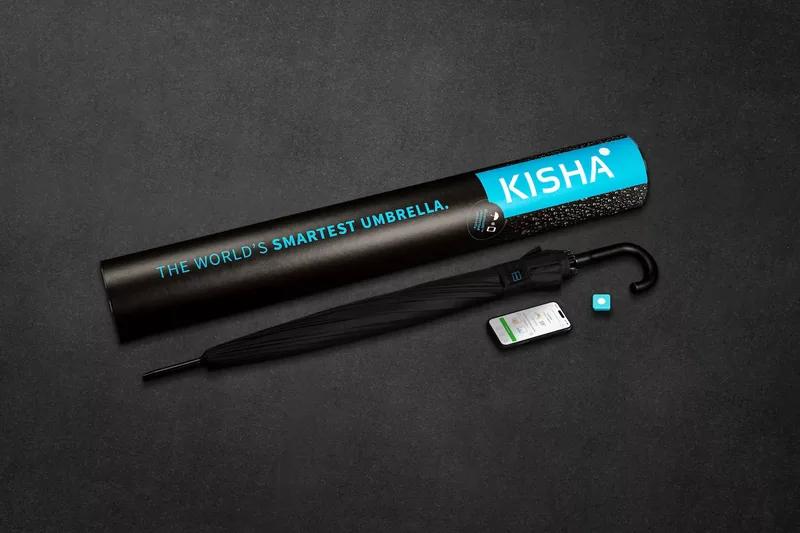
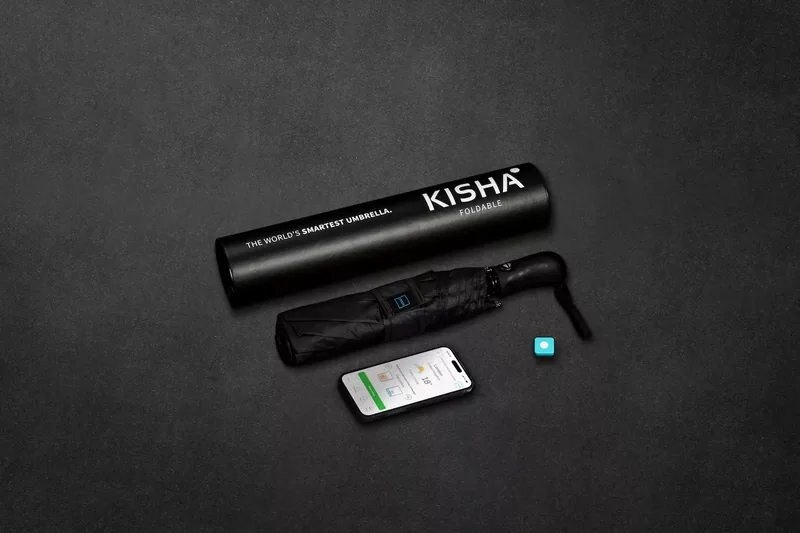
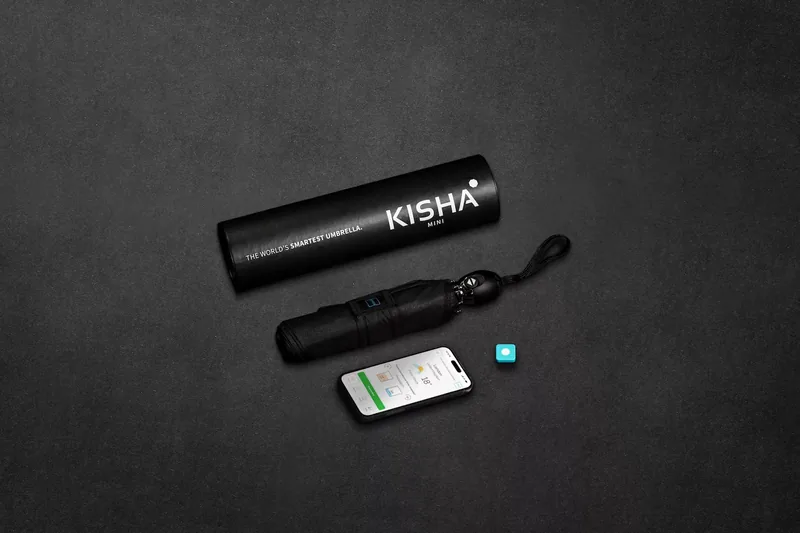
| KISHA Smart Umbrella | Yes — location-relevant alerts | Yes — Bluetooth with app map | Classic tested at 140 km/h | Built for long-term daily use | Strong balance of alerts, tracking and real umbrella performance |
| Generic tracker umbrellas | Usually none | Basic Bluetooth | Often weak or untested | Low–medium | Tracker helps with loss but not rain surprises |
| Past “smart” crowdfunding projects | Promised, often unreliable | Mixed | Usually poor | Low | Gimmicky execution undermined the idea |
Many products solve one small part of the problem. Very few solve both getting caught in rain and losing the umbrella, while also being a proper windproof umbrella you can rely on for years.
Why KISHA’s Approach to Smart Features Makes Sense
KISHA keeps the smart part focused on the two problems people actually have.
Rain alerts use established weather data to notify you when rain is likely soon — before you leave home or the office. They’re not constant noise; they appear when there’s a practical reason to take the umbrella.
The integrated Bluetooth tracker connects to the same app. If you leave the umbrella somewhere, you open the app and see where it last connected. In a city where you move between home, work, cafés and public transport, that removes a recurring annoyance.
These features sit on top of a strong physical umbrella. The Classic was tested at 140 km/h, and flexible fibreglass ribs mean the smart functions aren’t compensating for a weak product. Mechanical parts carry a 1-year warranty with free replacement, with optional 2- and 3-year extensions.
Smart Features + Real Performance
A smart umbrella only makes sense if the umbrella itself is good. Alerts and tracking don’t help much if the frame snaps in the first proper gust.
KISHA pairs the smart functions with the same windproof approach covered in our guide to windproof umbrellas for European conditions. You want to trust that the umbrella will work when the alert tells you to take it — and that it will survive more than one or two seasons so the smart features pay off.
Many earlier smart umbrella attempts focused on technology and treated the umbrella as an afterthought. KISHA reverses that priority.
Is a Smart Umbrella Worth It? (Honest Take)
Yes, if you regularly get caught in sudden rain or often leave your umbrella behind. The alerts and tracker directly reduce those frustrations. Over a year or two the convenience adds up, especially with an umbrella built for long-term daily use.
Maybe not, if you’re already very disciplined about checking weather and rarely misplace things. You can still benefit from a high-quality windproof umbrella without the app.
The honest middle ground: smart features become more valuable the longer the umbrella lasts. A cheap smart umbrella that breaks after a year wastes the technology. A well-built one makes the alerts and tracker useful for years.
FAQ
Do smart umbrellas actually work?
Some do and some don’t. The ones that work focus on simple, reliable features — rain alerts early enough to act on, and a tracker that helps you find the umbrella. Products that overpromise complex automation often disappoint.
What kind of alerts do smart umbrellas give?
Useful ones send a notification when rain is likely in your area within a short time window. The best alerts avoid constant noise and only appear when there’s a practical reason to carry the umbrella.
Is a smart umbrella worth it?
Worth it for people who frequently get surprised by rain or misplace their umbrella. Value increases when the umbrella itself lasts many seasons. If you’re already consistent about weather checks and never forget things, the smart features add less benefit. See also how to choose an umbrella.
How does an umbrella connect to an app?
Most use Bluetooth. A small module in the umbrella connects to your phone when nearby. The app can then send alerts and show the last known location. No constant internet connection on the umbrella itself is needed.
Can the tracker help if I leave the umbrella on public transport?
Yes, up to a point. It shows the last place the umbrella connected to your phone. If you left it on a tram or bus, you often have a clear idea of where and can act quickly. It won’t follow the umbrella once it’s out of Bluetooth range, but it usually gives enough information to recover it.
Does the smart umbrella still work well in strong wind?
The better ones do. KISHA combines the smart features with proper windproof construction — the Classic was tested at 140 km/h — and flexible fibreglass ribs. Alerts and tracking don’t replace a strong frame and canopy.
KISHA brings rain alerts and Bluetooth tracking together with the windproof performance that actually matters in European weather. Explore the current models and colours.